No-See-Ums Getting Through Your Screen? Here's Why.
J-Rod and Sons Screen Rooms — family-owned screen room builders in Greater Jacksonville. 15 years in the trade, 300+ enclosures, and a 10-year workmanship warranty on every build.
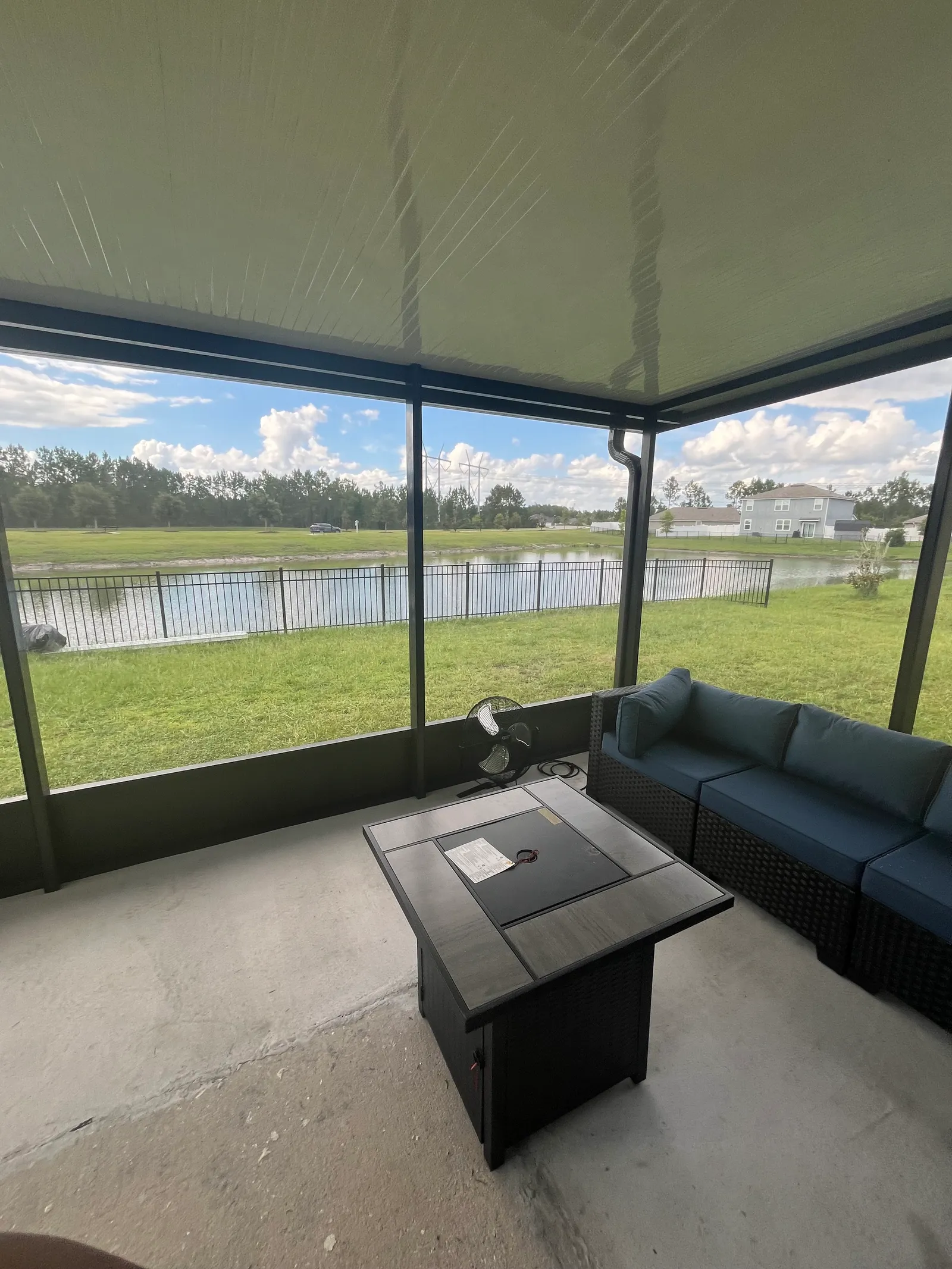
The short version
Standard screen doesn't stop no-see-ums. They go straight through the weave — your screen isn't torn and it isn't loose, the holes are simply bigger than the bug. Retensioning won't fix it and neither will a fresh set of the same mesh. The fix is a tighter no-see-um mesh. The catch: tighter weave means less airflow, so only buy it if you actually have them.
Every summer we get the same call, usually from someone near the water: “I just had my screen done and I'm still getting eaten alive. Did they do it wrong?”
Almost always, no. The screen is fine. It was just never going to work.
Why your screen isn't stopping them
No-see-ums — biting midges, if you want the proper name — are tiny. Small enough that standard fiberglass screen simply does not present a barrier. The University of Florida's entomology extension has the specifics if you want them, but the practical version is this: standard mesh is built to stop mosquitoes, and a no-see-um is a fraction of that size.
So when people tell us their screen “isn't working,” we start by ruling out the things that actually are failures:
- Tears, especially at corners and along the bottom panels
- Panels that have lost tension and pulled away from the frame
- A door that isn't latching or is out of alignment
- Gaps where the screen meets the kick plate
Those are all real problems and all fixable — that's ordinary screen repair. But if none of those are present and you're still getting bitten, the mesh itself is the answer, not the installation.
The actual fix
A tighter weave. No-see-um mesh has a much finer opening than standard fiberglass — enough to keep the midges out. Manufacturers like Phifer publish the actual mesh counts if you like reading spec sheets.
The cheapest moment to do it is while the old screen is already coming out. Whether we're rescreening a pool cage or screening a lanai, the labor is the same either way — the mesh upgrade costs very little extra on top of work you're already paying for. Doing it as its own trip later means paying the labor twice.
The tradeoff nobody mentions
Here is the part the guy upselling you tends to leave out: a tighter weave is a tighter weave. It restricts airflow. On a still August evening in Jacksonville, you will feel the difference — a no-see-um enclosure breathes less than a standard one. It also cuts visibility slightly and collects dust a bit more.
That is a genuinely good trade if no-see-ums are ruining your evenings. It is a bad trade if they aren't, and you've just paid extra to make your porch stuffier.
How to tell if you need it
The honest test is not complicated:
- Are you actually being bitten inside the enclosure? Not near it — inside it, with the door shut.
- Is it worst at dawn and dusk? That timing points at midges.
- Are you near standing water? Ponds, marsh, the Intracoastal. Homes backing onto water are where we spec this most.
- Have you ruled out tears and gaps? Do that first — it's cheaper.
If you're nodding at all four, you want the no-see-um mesh. If you're not, standard fiberglass will serve you better and cost less. We spec it to your yard, not to the invoice — and we'll tell you when you don't need the upgrade, which is more often than you'd think.
FAQ
Will rescreening with the same mesh stop no-see-ums?
No. If the mesh is the same weave, you'll get the same result with newer screen. That's the whole point — it's not a wear problem.
Can I do just one section in no-see-um mesh?
You can, but it rarely helps. Bugs use the openings you didn't upgrade. If it's worth doing, it's worth doing on the whole enclosure.
Does no-see-um screen stop mosquitoes too?
Yes. It's a tighter weave than standard mesh, so anything standard screen stops, it stops.
Will it make my lanai hotter?
It restricts airflow somewhat, and on a still evening you'll notice. Most people who genuinely have no-see-ums take that trade happily. People who don't have them regret it.
Is no-see-um screen the same as pet screen?
No. Pet screen is heavier and built to resist claws and traffic; no-see-um mesh is finer and built to block small insects. Different jobs — you can run pet-resistant screen on the lower panels and no-see-um above.
Walk the job with the owner.
Tell us what you're thinking. We'll come look, point out what we'd do differently, and only quote what we're confident we can deliver.