Screen Room vs. Sunroom vs. Florida Room: Which Do You Actually Want?
J-Rod and Sons Screen Rooms — family-owned screen room builders in Greater Jacksonville. 15 years in the trade, 300+ enclosures, and a 10-year workmanship warranty on every build.
The short version
The difference is glass and air conditioning. A screen room is an aluminum frame with screen — open-air, no glass, no cooling, and the cheapest of the three. A sunroom (what a lot of Floridians still call a Florida room) has glass or vinyl walls and can be climate-controlled, which costs more and usually means HVAC and heavier permitting. If you want to sit outside without the bugs, you want a screen room. If you want a room you can run the AC in come August, you want a sunroom. We build screen rooms — and we'll tell you when a sunroom is what you actually need.
People use these three words like they mean the same thing, and then get a quote that's three times what they expected — or a room that doesn't do what they wanted. So before you call anyone, here's the honest breakdown of what you're actually choosing between.
What a screen room is
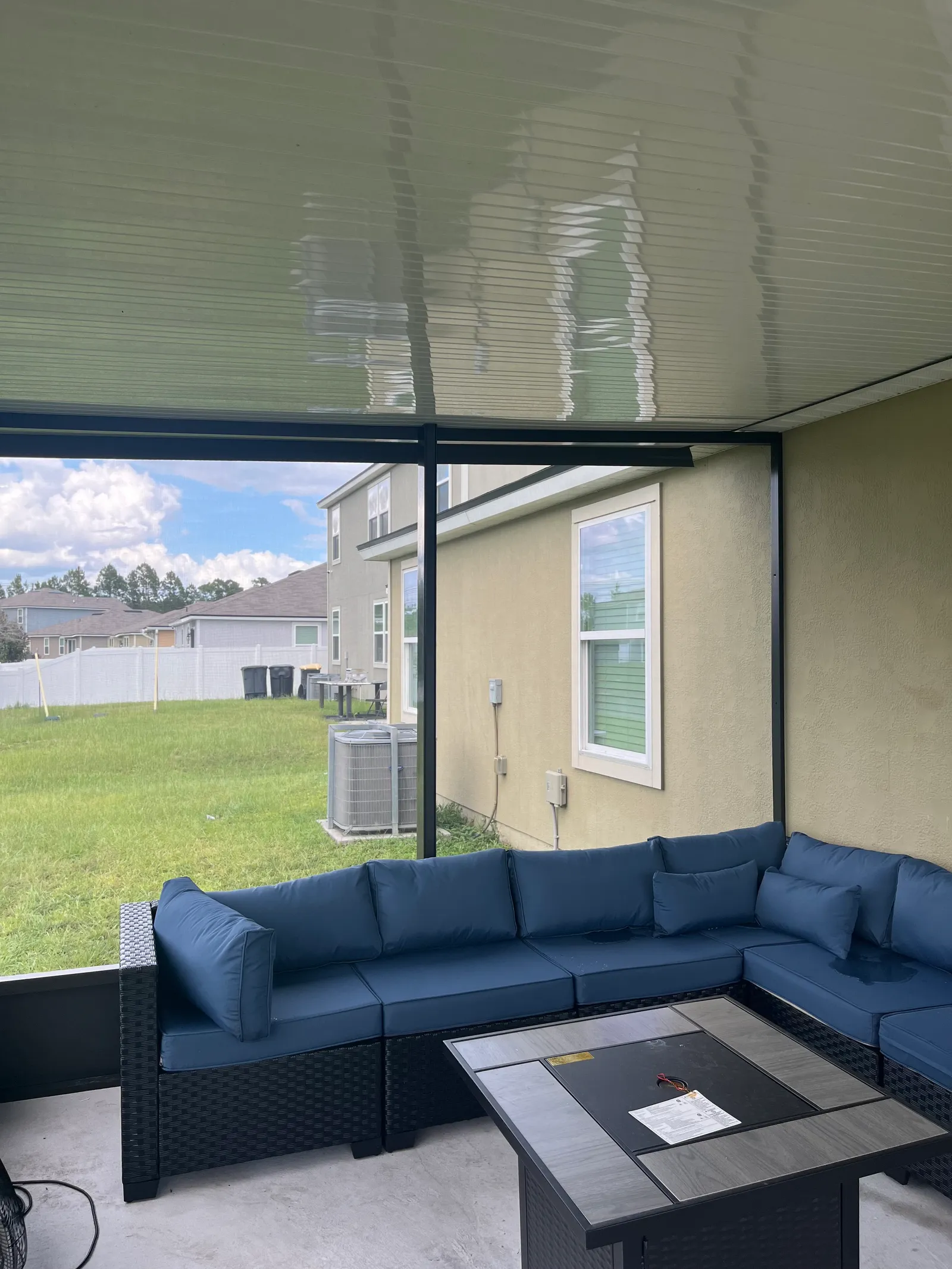
A screen room is an aluminum frame with screen panels, built onto your patio, deck, or slab. No glass. It's open-air by design — breeze comes through, bugs don't.
What it's for:
- Sitting outside in the morning and evening without getting eaten alive
- Keeping leaves, pollen, and debris off a patio or pool deck
- Adding usable space fast and at the lowest cost of the three
What it is not: a room you can heat or cool. There's no glass to seal it, so it's the same temperature as outside. On a still August afternoon, a fan helps and the shade helps, but it's still a Florida afternoon. If you've already got a roof over the space, screening in the sides — walls under an existing cover — is the fastest, cheapest version of this.
Sunroom vs. Florida room
Here's the part that trips people up: a sunroom and a Florida room are basically the same thing. “Florida room” is the older regional term; “sunroom” is what the rest of the country says. Both mean a room with glass or vinyl walls, enclosed against the weather, that can be climate-controlled.
The real dividing line isn't the name — it's whether the room is under air:
- Not under air: glass or vinyl walls, sealed against rain and bugs, but no HVAC. Comfortable most of the year, hot in peak summer.
- Under air: tied into your home's heating and cooling (or its own unit). Now it's true year-round living space — and typically counts as heated square footage, which matters for resale.
Either way, a sunroom is a bigger build than a screen room: glass, sealing, insulation, and — if it's under air — HVAC work and stricter permitting under the Florida Building Code. That's a different trade from what we do.
The real trade-offs
The honest comparison, without the sales gloss:
- Cost: Screen room is the cheapest by a wide margin. A sunroom not under air is a big step up. A sunroom under air is the most expensive, because you're adding HVAC.
- Summer use: Only the under-air sunroom is genuinely comfortable at 3pm in August. The other two are shade-and-breeze spaces.
- Bugs and airflow: A screen room breathes — that's the whole point. A sunroom seals out weather but also seals out the breeze.
- Permitting: All three are permitted structural work here (see do you need a permit), but a sunroom under air pulls in mechanical and energy code on top of the structure.
- Resale: A permitted, under-air sunroom can add heated square footage. A screen room adds usable outdoor living for a fraction of the money. Which one “wins” depends entirely on your budget and how you'll use it — the efficiency of the glass and HVAC matters a lot if you go the sunroom route.
Which one you actually want
Match the room to how you'll really use it:
- “I want to enjoy my patio without bugs, morning and evening.” → Screen room. Don't spend sunroom money on a problem screen solves.
- “I want to keep my pool clean and screened.” → A pool cage, which is a screen room around the water.
- “I already have a covered porch, I just want it closed in.” → Screen the sides — walls under.
- “I want a real room I can use with the AC on in July.” → Sunroom under air. That's not us — and we'll say so rather than sell you a screen enclosure that won't do it.
That last one is the whole reason we wrote this. Plenty of homeowners come to us wanting a screen room when they describe a sunroom, or the other way around. We would rather lose the sale than build you the wrong room — it's the same standard we hold on everything, which you can read about on why homeowners hire us.
FAQ
Is a screen room cheaper than a sunroom?
Yes, considerably. A screen room is aluminum frame and mesh. A sunroom adds glass or vinyl walls, sealing, and often HVAC — each of which adds cost. If budget is the driver and you don't need air conditioning, the screen room is the call.
Can I use a screen room in a Florida summer?
In the shade, with a fan, mornings and evenings — comfortably. What you can't do is cool it, because it's open-air. If you want a 72-degree room on an August afternoon, that's a sunroom under air.
What's the difference between a sunroom and a Florida room?
Mostly just the words. “Florida room” is the older local term and “sunroom” is the national one. Both mean an enclosed, glass-walled room. Treat them as the same category when you're comparing against a screen room.
Does a screen room or a sunroom add more home value?
A permitted, under-air sunroom generally adds measurable heated square footage. A screen room adds usable outdoor living at a fraction of the cost. Neither is automatically “better” — it depends on your budget and how you'll use the space.
Do you build sunrooms too?
We build screen rooms, pool cages, patio covers, and the related work. A full glass sunroom under air is a different trade. If that's what you actually want, we'll tell you and point you the right direction — call (904) 862-8688 and we'll talk it through either way.
Walk the job with the owner.
Tell us what you're thinking. We'll come look, point out what we'd do differently, and only quote what we're confident we can deliver.